Ed Rendell
2006 Campaign for the Governor of Pennsylvania
Won by a Landslide
This was the official website for Democratic incumbant Ed Rendell's 2006 campaign for the governor of Pennsylvania against Lynn Swann, a former professional football player for the Pittsburgh.
Content is from the site's 2006 archived pages and other outside sources.
Ed Rendell won re-election as governor in 2006 by a landslide. He left office in 2011 due to term-limits, and released a book, A Nation of Wusses: How America's Leaders Lost the Guts to Make Us Great the following year.

2006
Governor Edward G. Rendell
Edward G. Rendell was inaugurated as Pennsylvania’s 45th Governor on January 21, 2003. As Governor, Rendell serves as Chief Executive of the nation’s 6th most populous state and oversees a $22 billion budget.
In Governor Rendell’s first term, Pennsylvania has rebounded sharply from the recession of the early 2000s. He has made unprecedented investments to revitalize communities across the commonwealth, improve education and expand the access to affordable prescription drugs for older Pennsylvanians.

Today, these investments are paying off.
There are more Pennsylvanians working than ever before, with more than 120,000 more people at work now than when Governor Rendell took office in January 2003. Pennsylvania now ranks 15th in the nation for job growth, up from 41st just four years ago. Importantly, our unemployment rate has fallen over a full point and continues to be below the national average.
Under Governor Rendell, student achievement is on the rise at every grade level and in every subject. Pennsylvania’s public schools now have the resources to invest in proven education initiatives like pre-kindergarten, full-day kindergarten and tutoring. Almost 100 school districts are investing in class-size reduction in kindergarten through 3rd grade to benefit nearly 20,000 children.
In his first year in office, Governor Rendell crafted a plan to increase the number of older Pennsylvanians to get the affordable prescription drugs they need through Pennsylvania’s PACE and PACENET programs. By this summer, more than 315,000 Pennsylvania seniors will be served – up 44 percent.
Governor Rendell has done all of this while being a careful steward of the commonwealth’s finances. When he became Governor in January 2003, the commonwealth faced a projected budget deficit of $2.4 billion. As one of his first acts, Governor Rendell cut government spending to close that deficit and implemented programs and policies to apply business principles of productivity and cost-savings to the operation of state government. By the end of 2006, through developing new business practices and focusing on innovation and efficiency throughout the government, the cost of government has been cut by $1 billion.
From 1992 through 1999, Governor Rendell served as the 121st Mayor of the City of Philadelphia. Among his many accomplishments as Mayor, Mr. Rendell eliminated a $250 million deficit; balanced the City's budget and generated five consecutive budget surpluses; reduced business and wage taxes for four consecutive years; implemented new revenue-generating initiatives, and dramatically improved services to the City's neighborhoods. The New York Times called the Philadelphia renaissance under Rendell “the most stunning turnaround in recent urban history.” Before serving as Mayor, Mr. Rendell was elected District Attorney of the City of Philadelphia for two terms from 1978 through 1985.
The Governor, who served as General Chair of the Democratic National Committee during the 2000 Presidential election, has always been active in the community through a variety of memberships on boards and also teaches government and politics courses at the University of Pennsylvania. An Army veteran, the Governor is a graduate of the University of Pennsylvania (B.A. 1965) and Villanova Law School (J.D. 1968). He was born on January 5, 1944.
The Governor and his wife, First Lady Marjorie O. Rendell, a Judge on the United States Court of Appeals for the Third Circuit, have one son, Jesse. They will celebrate their 35th wedding anniversary on July 10, 2006.

Constituent feedback by Lucy McCann: Ed Rendell was one of most beloved governors the state has ever had. I represent a coalition of supporters who have advocated for major changes to laws governing big tech. Actually there are very few such laws, but as this article proves, there is a need for legislation to rein in the practices of Google and other large tech firms. Google's lack of concern for personal privacy is one giant elephant in the room that seems to be forever ignored by politicians. Owners of online businesses have also complained about their sites receiving an inappropriate Google penalty, basically shutting them down due to actions of unethical 3rd parties, even though Google claims this is impossible. Before he left office, Ed gave us access to his contacts in Washington that might be more willing to act on these issues. Google's search results need to be free of invasive exposure of our most personal information, and their ability to penalize businesses definitely needs better oversight - regulation is in order. Thank you Ed for your help, even as you leave office!
NEWS
State Signs Deal Making It No. 1 in 'Green' Power
- 8/30/2006
Pittsburgh Post-Gazette
By Tracie Mauriello
The commonwealth is poised to become the largest state purchaser of renewable energy sources in the country, Gov. Ed Rendell said yesterday as he unveiled a new agreement with the state's electric supplier, Community Energy of Wayne, Delaware County.
The agreement calls for 20 percent of electricity used by state government to come from renewable sources like wind and hydropower. That's twice as much as in the current contract.
The change means a cost increase of less than 1 percent. The state currently spends about $70 million a year on electricity. Under the new agreement, that cost is expected to grow to $70.5 million, Environmental Protection Secretary Kathleen A. McGinty said yesterday at the DEP's Southeast Regional Office, where she and the governor unveiled the new contract.
+++++
Rendell Opposes Gasoline Tax Increase
- 8/29/2006
Pittsburgh Post-Gazette
By Mark Belko, Post-Gazette
Gov. Ed Rendell said yesterday that he would not support an increase in the state gasoline tax to help raise $866 million to $2.2 billion to rebuild roads and bridges in Pennsylvania and get mass transit agencies in Pittsburgh and Philadelphia out of debt.
Mr. Rendell said Pennsylvania already has the third-highest gasoline tax in the United States.
"With gas averaging over $3 a gallon this past year, this is not the time to consider a gas tax increase," said the governor, who is seeking re-election.
He would not say specifically how he would come up with the funding called for by the Pennsylvania Transportation and Funding Reform Commission. He said the state has found ways in the past "to stretch highway dollars" and would look to do so in future.
But he added it would be unrealistic to expect the state to fill the gap without new sources of funding. He said that does not necessarily mean an increase in a tax or fees, given that the economy is doing well and generating surpluses for the state.
He said another possible source of funding is the oil company franchise tax.
The commission is expected to deliver a final report with recommendations on funding by Nov. 15, not coincidentally after the general election.
+++++

Government Reform Survey
- 8/28/2006
The Herald Standard
Democratic Gov. Ed Rendell and Republican opponent Lynn Swann outlined their positions on government reform in a survey conducted by Democracy Rising PA, a coalition of government watchdog groups. For the full survey, visit online at www.democracyrisingpa.com
Excerpts from their answers to reform proposals are as follows:
Should Pennsylvania have the highest standards of public integrity in the nation?
Rendell: Yes. We must work together to strengthen our democratic system in order to ensure that citizens have confidence that their government is operating on their behalf
Swann: Yes, it is my commitment to the citizens of the Commonwealth that my administration will work in a way that guarantees open and transparent behavior.
Lobbyist disclosure: require lobbyists to register and report spending to influence state government.
Rendell: After the General Assembly failed to pass legislation on this important issue ... I (signed) an executive order requiring that those who lobby the Executive Branch register and report their lobbying expenditures. The General Assembly needs to follow suit by passing meaningful lobbyist disclosure that requires anyone who lobbies to register and complete itemized expenditure reports. These reports must identify who is lobbying, on what issues, how much they have spent to lobby, whether they have given any gifts to members, and, if so, how much and to whom.
Swann: A lobbyist disclosure measure must indicate what is being spent by whom and there must be strong penalties for those who refuse to comply. Every document filed must be available for viewing on the Web. I will ensure that a strong lobbyist law is one of the first bills I sign.
Term limits
Rendell: We must also end permanent incumbency by introducing 8-year term limits for legislators which is consistent with the 8-year gubernatorial term limit. I believe that term limits will free legislators to vote their conscience on major issues facing the Commonwealth without worrying about the effect on their careers in the GA.
Swann: Does not mention in survey but supports.
Redistricting
Rendell: It is essential to reform the process for drawing state legislative boundaries so that redistricting is conducted by a nonpartisan independent commission that can ensure that appropriate representation is the sole driving force behind the creation of legislative districts.
Swann: No position.
+++++
Pittsburgh Post-Gazette
By Mark Belko, Post-Gazette
Gov. Ed Rendell said yesterday that he would not support an increase in the state gasoline tax to help raise $866 million to $2.2 billion to rebuild roads and bridges in Pennsylvania and get mass transit agencies in Pittsburgh and Philadelphia out of debt.
Mr. Rendell said Pennsylvania already has the third-highest gasoline tax in the United States.
"With gas averaging over $3 a gallon this past year, this is not the time to consider a gas tax increase," said the governor, who is seeking re-election.

+++++
8/17/2006
Ed Rendell Endorsed for Governor by PA State Building & Construction Trades Council
HARRISBURG: The Pennsylvania State Building & Construction Trades Council has endorsed Governor Ed Rendell for another term. The Council is comprised of 121 affiliated local unions from 50 regional counties across the Commonwealth, which represents more than 100,000 working families.
The Council endorsed the Governor earlier this week at their Annual Convention held at the Hilton Harrisburg. Governor Rendell addressed the group during their morning session.
"I am proud and honored to receive the Pennsylvania State Building and Construction Trades Council endorsement. The Council is comprised of hard-working Pennsylvanians that contribute so much to our Commonwealth,” Governor Rendell said. “As governor, I will remain committed to revitalizing our communities and creating the jobs we need for a greater Pennsylvania. We will continue our progress and make the changes we need for today and for our children's tomorrow."
The Governor’s $2.3 billion Economic Stimulus plan has led to the highest employment levels in Pennsylvania history and 125,000 more people are at work since Governor Rendell took office in January 2003. Pennsylvania is now ranked 15th in the nation for job growth – compared to 41st just four years ago. Governor Rendell also proposed, fought for and signed into law an increase in the minimum wage that will help 420,000 hard-working Pennsylvanians. It was the first hike in seven years.
“After interviewing both candidates, there is no doubt that re-electing Ed Rendell will lead to more jobs for Pennsylvania workers,” said Frank Sirianni, President of Pennsylvania State Building & Construction Trades Council.
+++++
8/15/2006
Gov. Rendell Attends House Party Hosted by Campaign "Citizen Co-Chair"
PLYMOUTH MEETING: Yesterday, Governor Ed Rendell attended a house party hosted by “Citizen Co-Chair” Mark Levy in Plymouth Meeting, PA. About 100 Democrats, including State Senator Connie Williams, State Representative Mike Gerber, and Montgomery County Democratic Chair Marcel Groen, gathered to help support the Governor’s re-election campaign.
“When I kicked off my campaign for re-election, I wanted citizens of the Commonwealth to help me get the message out about the impact my administration have had on the state in the past four years,” said Governor Ed Rendell. “There are no better people to talk about these accomplishments than those who have benefited from them personally.”
“Citizen Co-Chairs” hosted house parties throughout the Commonwealth. Co-Chairs invited their friends and neighbors into their homes to encourage them to get involved in Governor Rendell’s re-election campaign.
Speaking on a conference call among all house party hosts were “Citizen Co-Chairs” Valerie McDonald Roberts, Allegheny County Recorder of Deeds, Tom Furhman, Director of Lake Erie Conservancy, and Luzerne County Commissioner Todd Vonderhied. Each spoke of the policies and programs that have personally affected them, their families and their communities.
“Governor Rendell has Pennsylvania moving in the right direction,” said Representative Gerber, “and deserves our vote so he can continue taking our Commonwealth down this very positive road. I am excited Governor Rendell chose to join us here in Montgomery County and in Plymouth Township for tonight's event.
+++++

8/14/2006
Patrick Murphy Joins "Veterans for Rendell"
Levittown – Patrick Murphy, former US Army Captain, Iraq War Veteran, and Democratic Nominee for Pennsylvania’s 8th District, joined veterans from all over southeastern Pennsylvania in endorsing Governor Ed Rendell for re-election. Speaking at the Joseph Schumacher VFW Post in Croyden, Patrick Murphy spoke on how Governor Rendell has consistently fought for Pennsylvania’s veterans, and deserves to be re-elected in November.
“Governor Rendell is a true friend to the veterans of Pennsylvania, and he deserves our support this November,” said Patrick Murphy. “With a Congress that’s constantly trying to nickel-and-dime our troops returning from war, it’s good to know we can trust Governor Rendell to fight for veterans in Harrisburg. As an Iraq War veteran, I’ve proposed ‘A Soldier’s Promise: A New GI Bill of Rights,’ a way to guarantee that the federal government, and not just the state governments, is treating our soldiers with the respect and dignity they deserve. I’m proud to stand alongside Governor Rendell today, as he is a true friend of Pennsylvania veterans, and I’m proud to stand alongside him on the ballot this November.”
“Men and women that pledge to serve our country in the armed services are an extremely vital group within the Commonwealth," Governor Rendell said. “They are people that dedicate their lives to protecting others and it is crucial that we as government leaders provide the support these individuals need and deserve. Whether we are talking about bonuses, protecting the voting rights of soldiers serving abroad, or offering tax abatements and educational opportunities to veterans and their families, it's important to do what we can to help veterans and their families.”
+++++
8/13/2006
Ed Rendell Endorsed for Governor By Pennsylvania Teamsters
PHILADELPHIA: The Pennsylvania Conference of Teamsters, the statewide Teamsters union, today endorsed Governor Rendell for another term. The Pennsylvania Conference of Teamsters consists of two (2) Joint Councils and 42 Local Unions located in Pennsylvania, Delaware, New Jersey and West Virginia. There are approximately 142,000 members of the Teamsters Union in Pennsylvania whose endorsement was received today. The organization's president, Frank Gillen, made the announcement today at an endorsement event held in Philadelphia.
“I could not be prouder to once again receive the Teamsters’ endorsement. The men and women who get up for work every day and put in an honest day for an honest wage are the foundation of Pennsylvania,” Governor Rendell said. “As governor, I will remain committed to revitalizing our communities and creating the jobs we need for a greater Pennsylvania. We will continue our progress and make the changes we need for today and for our children's tomorrow."
The Governor recently led a successful effort to increase the minimum wage to $7.15 an hour, a bill that will benefit approximately 423,000 low-wage earners in Pennsylvania. His $2.3 billion Economic Stimulus plan has led to the highest employment levels in Pennsylvania history and 125,000 more people are at work since Governor Rendell took office in January 2003.
“Governor Rendell is the clear choice for Pennsylvania. He increased the minimum wage for the first time since 1997 and his economic policies have led to 125,000 new jobs in Pennsylvania,” said Mr. Gillen. “He has the experience and the track record that Pennsylvania needs to build upon the Commonwealth’s record employment total.”
+++++

8/10/2006
Swann's Signature is $150, But His Ideas are Just $10
SWANN’S SIGNATURE? $150
SWANN’S IDEAS? $10
RENDELL’S RECORD OF ACCOMPLISHMENT? PRICELESS.
Republican Candidate’s Campaign Rhetoric Can Not Match Governor Rendell’s Record
PHILADELPHIA: Yesterday, Lynn Swann, the handpicked candidate of George W. Bush and Republican insiders in Harrisburg and Washington, DC, released a campaign book to counter criticisms he was unprepared to discuss key issues facing Pennsylvania. Swann, who reportedly charges as much as $150 for his autograph, is selling the campaign book for $10.
Although even his own campaign acknowledges some key issues are not addressed in the book, Swann did find room to continue his pattern of harshly criticizing Governor Rendell. As the AP reported, “The 143-page paperback is laced with attacks on Rendell.” Swann has been caught repeatedly making misleading and factually false claims on the campaign trail while attacking the Governor.
But even if Swann is ramping up his rhetoric, he still can not match Ed Rendell’s record of accomplishment. Even Republicans like state Senator Joe Scarnati agree that “this governor has lived up to his commitments.” [St. Mary’s Daily Press, 7/26/06]
Among Governor Rendell’s accomplishments are:
- Pennsylvania has the highest number jobs in its history with 125,000 jobs added since Governor Rendell took office in January 2003;
- Pennsylvania is one of only 7 states nationally whose students are making progress in both reading and math;
- Breaking a 30 year log jam to provide the first property tax relief to every Pennsylvania homeowner. 200,000 seniors will see their school property taxes completely eliminated;
- Reducing the cost of and improving the operation of government – saving taxpayers $1 billion;
- Expanding the nation’s best prescription drug programs, PACE and PACENET, to allow almost 100,000 additional seniors access to needed prescriptions; and
- Protecting and preserving our environment through “Growing Greener II,” a $625 million bond issue that is already making needed investments.
+++++
8/8/2006
Environmental Groups Endorse Governor Rendell and Bob Casey
Event also helps kick off “Environmentalists for Rendell”
NORRISTOWN: Today, Governor Ed Rendell and Senate nominee Bob Casey received the endorsement of three leading environmental groups, the League of Conservation Voters, Clean Water Action and the Sierra Club at an 11:00 am press conference at the Montgomery County Courthouse in Norristown, PA. The endorsement also serves as the official kick-off of “Environmentalists for Rendell,” part of the Governor’s “Citizen Co-Chair” campaign.
“I am extremely proud to receive these endorsements today,” said Governor Rendell. “Pennsylvania is making extraordinary progress in protecting the water we drink, the air we breathe, and the open space that is vital to our quality of life. We are proving that smart environmental investments make for wise economic policy, and we are creating the jobs of the future in the alternative energy economy at the same time as we move towards energy independence.”
“On the environment, health care and a host of other issues, the country is headed in the wrong direction,” added the Governor. “We need a U.S. Senator who puts Pennsylvania first. Bob Casey will be that Senator and that is why I, like these environmental leaders, am proud to support him.”
“I am committed to preserving Pennsylvania’s great natural resources and reversing the mounting anti-environmental policies in Washington” said Pennsylvania State Treasurer and Senate nominee Bob Casey. “I am devoted to developing a comprehensive energy policy to reduce emissions and lessen our state’s dependence on foreign oil. Governor Rendell and I believe that investments in our environment are investments in our economy, new jobs, and our quality of life for all of Pennsylvania’s citizens.”
Pennsylvania League of Conservation Voters (PALCV), the independent political voice for the environment, commended Governor Rendell for making Pennsylvania a leader in alternative energy sources. “Governor Rendell is committed to making real progress toward a sustained program for energy independence,” stated PALCV Board Chair, Jan Jarrett. “That is essential to economic and national security.”
PALCV also recognized Bob Casey for his commitment to developing and promoting alternative energy sources stating, “We commend Mr. Casey for his promise to require power plants to generate reasonable percentages of their output from renewable power sources. This is the type of dedication that is required to improve the environmental quality of Pennsylvania.”
Clean Water Action (CWA), a national citizens organization dedicated to the maintenance of clean, safe and affordable water and prevention of health-threatening pollution, praised the Governor for his initiative to reduce mercury pollution. “Thanks to Governor Rendell,” Bob Wendelgass of CWA stated, “Pennsylvania is now a national leader in the battle against mercury pollution and one of the states setting the pace in protecting our kids against this toxic pollutant."
CWA also expressed appreciation of Bob Casey for his support of strong federal environmental standards, including a strong federal mercury reduction rule. Wendelgass noted that "Bob Casey supports making polluters, not taxpayers pay to clean up contaminated sites, protecting the health of nearby residents and the pockets of taxpayers.” Wendelgass added: “Pennsylvania still has lots of environmental problems to solve. We need a Governor who will lead the fight in Pennsylvania, and a Senator who will stand up for the environment in Washington. We need Ed Rendell in the Governor’s Mansion in Harrisburg and Bob Casey in the Senate in Washington.”
The Sierra Club, one of the nation’s oldest, largest and most influential grassroots environmental organizations, is dedicated to the environmental protection of both our communities and our planet. One of the most important ways to do this, Robin Mann of the Sierra Club stated “is to raise the fuel economy of our cars and light trucks. Clean vehicles are the key to a sustainable environmental program, and both Governor Rendell and Bob Casey are committed to encouraging this initiative.”
“Governor Rendell has proved his dedication to clean air,” said Mann, “by beginning to replace the state government fleet with hybrid vehicles and by offering an economic incentive package that provides rebates for Pennsylvanians that buy hybrid vehicles. Also, Bob Casey will bring the fight for increased fuel efficiency standards in new automobiles to Washington and he favors tax incentives for companies that develop ways to reduce automobile emissions. Both candidates are committed to cleaning Pennsylvania’s air and Pennsylvania’s environment. That is why we support them and believe anyone that wants to protect the environment should too.”
+++++
8/82006
Environmental Groups Endorse Governor Rendell and Bob Casey
Event also helps kick off “Environmentalists for Rendell”
NORRISTOWN: Today, Governor Ed Rendell and Senate nominee Bob Casey received the endorsement of three leading environmental groups, the League of Conservation Voters, Clean Water Action and the Sierra Club at an 11:00 am press conference at the Montgomery County Courthouse in Norristown, PA. The endorsement also serves as the official kick-off of “Environmentalists for Rendell,” part of the Governor’s “Citizen Co-Chair” campaign.
“I am extremely proud to receive these endorsements today,” said Governor Rendell. “Pennsylvania is making extraordinary progress in protecting the water we drink, the air we breathe, and the open space that is vital to our quality of life. We are proving that smart environmental investments make for wise economic policy, and we are creating the jobs of the future in the alternative energy economy at the same time as we move towards energy independence.”
“On the environment, health care and a host of other issues, the country is headed in the wrong direction,” added the Governor. “We need a U.S. Senator who puts Pennsylvania first. Bob Casey will be that Senator and that is why I, like these environmental leaders, am proud to support him.”
“I am committed to preserving Pennsylvania’s great natural resources and reversing the mounting anti-environmental policies in Washington” said Pennsylvania State Treasurer and Senate nominee Bob Casey. “I am devoted to developing a comprehensive energy policy to reduce emissions and lessen our state’s dependence on foreign oil. Governor Rendell and I believe that investments in our environment are investments in our economy, new jobs, and our quality of life for all of Pennsylvania’s citizens.”
Pennsylvania League of Conservation Voters (PALCV), the independent political voice for the environment, commended Governor Rendell for making Pennsylvania a leader in alternative energy sources. “Governor Rendell is committed to making real progress toward a sustained program for energy independence,” stated PALCV Board Chair, Jan Jarrett. “That is essential to economic and national security.”
PALCV also recognized Bob Casey for his commitment to developing and promoting alternative energy sources stating, “We commend Mr. Casey for his promise to require power plants to generate reasonable percentages of their output from renewable power sources. This is the type of dedication that is required to improve the environmental quality of Pennsylvania.”
Clean Water Action (CWA), a national citizens organization dedicated to the maintenance of clean, safe and affordable water and prevention of health-threatening pollution, praised the Governor for his initiative to reduce mercury pollution. “Thanks to Governor Rendell,” Bob Wendelgass of CWA stated, “Pennsylvania is now a national leader in the battle against mercury pollution and one of the states setting the pace in protecting our kids against this toxic pollutant."
CWA also expressed appreciation of Bob Casey for his support of strong federal environmental standards, including a strong federal mercury reduction rule. Wendelgass noted that "Bob Casey supports making polluters, not taxpayers pay to clean up contaminated sites, protecting the health of nearby residents and the pockets of taxpayers.” Wendelgass added: “Pennsylvania still has lots of environmental problems to solve. We need a Governor who will lead the fight in Pennsylvania, and a Senator who will stand up for the environment in Washington. We need Ed Rendell in the Governor’s Mansion in Harrisburg and Bob Casey in the Senate in Washington.”
The Sierra Club, one of the nation’s oldest, largest and most influential grassroots environmental organizations, is dedicated to the environmental protection of both our communities and our planet. One of the most important ways to do this, Robin Mann of the Sierra Club stated “is to raise the fuel economy of our cars and light trucks. Clean vehicles are the key to a sustainable environmental program, and both Governor Rendell and Bob Casey are committed to encouraging this initiative.”
“Governor Rendell has proved his dedication to clean air,” said Mann, “by beginning to replace the state government fleet with hybrid vehicles and by offering an economic incentive package that provides rebates for Pennsylvanians that buy hybrid vehicles. Also, Bob Casey will bring the fight for increased fuel efficiency standards in new automobiles to Washington and he favors tax incentives for companies that develop ways to reduce automobile emissions. Both candidates are committed to cleaning Pennsylvania’s air and Pennsylvania’s environment. That is why we support them and believe anyone that wants to protect the environment should too.”
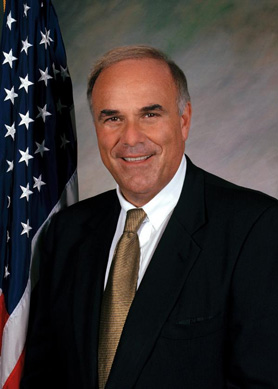
Photo courtesy of
Commonwealth of Pennsylvania
Governor Edward Gene Rendell
Terms: January 21, 2003 - January 18, 2011
Affiliation: Democrat
- Career History: Chairman, National Governors Association (2008-2011); Chair, Democratic National Committee (1999-2001); Mayor, City of Philadelphia (1991 to 1999); District Attorney, City of Philadelphia (1977 to 1985)
- Birthday: January 5, 1944
- Hometown: Philadelphia, Pa.
- Alma Mater: Villanova University, J.D., 1968; University of Pennsylvania, B.A., 1965
Biography
Edward G. Rendell, Pennsylvania's 45th governor, was born in New York City on January 5, 1944, the son of Jesse T. Rendell and Emma Sloat. All four of his grandparents were immigrants from Russia. He married Marjorie Osterland Rendell in 1971. They have a son, Jesse. An Army veteran, Rendell graduated from the University of Pennsylvania (B.A. 1965) and Villanova Law School (J.D. 1968). From 1992 through 1999, Governor Rendell served as the 121st Mayor of the City of Philadelphia. Among his many accomplishments as Mayor, Rendell eliminated a $250 million deficit, balanced the city's budget and generated five consecutive budget surpluses, reduced business and wage taxes for four consecutive years, and dramatically improved services to the City's neighborhoods. Before serving as Mayor, Rendell was elected district attorney of the City of Philadelphia for two terms from 1978 through 1985. Rendell served as general chair of the Democratic National Committee during the 2000 Presidential election, has always been active in the community through a variety of memberships on boards, and also teaches government and politics courses at the University of Pennsylvania.
Governor Rendell's unprecedented strategic investments energized Pennsylvania's economy, revitalized communities, improved education, protected the environment, expanded access to health care for all children, and provided affordable prescription drugs for older adults. He championed and signed into law Pennsylvania's first comprehensive measure to substantially reform the local tax system by providing urgently needed property tax relief to homeowners. During his tenure, taxpayers saved nearly $800 million in the first year of statewide property tax relief from gaming revenues.
Governor Rendell sought to make government more responsible to the public by cutting wasteful spending and improving government efficiency to save more than $1 billion. He pursued a legislative agenda that included commonsense political reforms to put progress ahead of partisanship.
Under Governor Rendell's leadership, Pennsylvania's economy rebounded sharply. Governor Rendell's economic stimulus plan invested more than $2.8 billion to create new jobs and revitalize communities. Under his administration, Pennsylvania ranked 15th in the nation for job growth, up from 41st at the beginning of Governor Rendell's first term. To ensure that all Pennsylvanians shared in the benefits of a growing economy, the Governor successfully championed the first minimum wage increase in nearly a decade.
Under Governor Rendell, student achievement rose at every grade level and in every subject. The Governor invested in proven education initiatives like pre-kindergarten, full-day kindergarten and tutoring. Pennsylvania went from being one of just nine states in the country that failed to fund pre-kindergarten to a national leader in early childhood investment, and for the first time ever more than half of Pennsylvania kindergartners attended full-day programs.
Governor Rendell also made Pennsylvania a leader in pursuing energy independence - creating jobs in the emerging alternative energy economy while developing effective strategies to reduce dependence on foreign oil and save families money.
Governor Rendell championed a dramatic increase in the number of older Pennsylvanians who received affordable prescription drugs through Pennsylvania's PACE and PACENET programs. He also saved older adults thousands of dollars a year that they would have been forced to pay under the federal Medicare Part D prescription drug plan.
In addition, Governor Rendell won passage of the landmark Growing Greener 2 environmental investment package. The $625 million initiative went to cleaning up rivers and streams, improving parks, returning abandoned industrial sites to productive use, protecting open space and preserving farmland.
Governor Rendell accomplished all of this while being a careful steward of the commonwealth's finances. When he became Governor, the commonwealth faced a projected budget deficit of $2.4 billion. As one of his first acts, Governor Rendell cut government spending to close that deficit and implemented programs and policies to apply business principles of productivity and cost-savings to the operation of state government.
http://www.phmc.state.pa.us
https://www.washingtonpost.com/

More Background On RendellForGovernor.com
RendellForGovernor.com was the campaign website associated with Democratic Governor Ed Rendell’s successful 2006 bid for a second term as governor of Pennsylvania. Although political campaign websites are often temporary by design, the domain provides a useful window into an important statewide election and into the way established political campaigns were beginning to use the Internet in the mid-2000s.
The campaign pitted Rendell, Pennsylvania’s incumbent governor and former mayor of Philadelphia, against Republican Lynn Swann, the Hall of Fame Pittsburgh Steelers wide receiver and longtime television sports broadcaster. Swann’s celebrity and extraordinary name recognition initially made the contest potentially competitive. Contemporary reporting described Rendell as politically vulnerable early in the cycle, particularly because of public dissatisfaction surrounding Pennsylvania’s controversial 2005 legislative pay raise and continuing disputes over property-tax relief.
By Election Day, however, the race was no longer close. Rendell and Lieutenant Governor Catherine Baker Knoll received 2,470,517 votes, compared with 1,622,135 for Swann and running mate Jim Matthews. Pennsylvania’s official election returns therefore document a margin of more than 848,000 votes.
That outcome gives RendellForGovernor.com historical significance beyond being a defunct campaign address. It represents the online component of a statewide political organization that successfully transformed what had initially appeared to be a potentially difficult reelection campaign into a decisive victory.
What RendellForGovernor.com Was
The historical material identifies RendellForGovernor.com as the official website for Rendell’s 2006 gubernatorial campaign against Lynn Swann.
Its primary purpose was straightforward: persuade Pennsylvania voters to give Rendell another four years in Harrisburg. The site did that principally by presenting the election as a referendum on Rendell’s first-term record.
Rather than introducing an unknown candidate, RendellForGovernor.com could point to nearly four years of gubernatorial activity. Its campaign material emphasized economic development, education, property-tax relief, prescription-drug programs for older Pennsylvanians, environmental initiatives, government efficiency and the minimum wage.
The site also functioned as an online newsroom. Campaign announcements, endorsements, responses to the opposition and coverage of public-policy issues helped create an ongoing narrative around the governor. This was particularly important in 2006, when political websites had become established campaign tools but social-media platforms had not yet assumed the dominant role they would play in later elections.
Today, the domain functions much more as a historical presentation of the campaign and Rendell era. Its value therefore lies partly in preserving material from a political website created during an important transitional period in online campaigning.
Ed Rendell Before the 2006 Campaign
Edward G. Rendell brought an unusually long political résumé to the race.
Before becoming governor, he had served as Philadelphia district attorney and then as mayor of Philadelphia. He was mayor from 1992 through 1999 and later served as general chairman of the Democratic National Committee during the 2000 presidential election period.
Rendell was elected governor in 2002 and inaugurated as Pennsylvania’s 45th governor on January 21, 2003. His first term therefore gave the 2006 campaign a substantial record to promote—and an equally substantial record for Swann to challenge.
The campaign biography on RendellForGovernor.com emphasized his earlier work in Philadelphia as evidence of executive experience. It credited his mayoral administration with eliminating a large municipal deficit, producing successive balanced budgets and improving city services. Such material was useful politically because the 2006 contest presented voters with candidates whose professional backgrounds differed considerably: Rendell was a veteran elected official and government executive, while Swann was making his first run for public office.
That experience-versus-change contrast became one of the underlying themes of the race.
Lynn Swann and an Initially Competitive Election
Lynn Swann was not a conventional gubernatorial challenger. His fame came primarily from football rather than government.
A celebrated Pittsburgh Steelers receiver, Swann had been a central figure in the franchise’s 1970s championship era before becoming a television broadcaster. When he formally entered the gubernatorial race in January 2006, the Associated Press reported that he had already spent months building political support around Pennsylvania. His candidacy attracted national attention partly because of his sports celebrity and partly because, had he won, he would have become Pennsylvania’s first Black governor.
His association with Pittsburgh football also gave him unusual visibility in western Pennsylvania. The Washington Post noted the political importance of the Steelers’ enormous regional popularity, particularly following the team’s Super Bowl XL victory in February 2006.
Early in the campaign, Swann appeared capable of presenting Rendell with a serious challenge. A January 2006 Washington Post report described polling that showed him giving the incumbent a competitive race.
The campaign consequently developed in two distinct phases: an early period when Rendell appeared vulnerable and a later period in which he established a substantial advantage.
Rendell’s Financial and Advertising Advantage
Money became an important part of that transformation.
By May 2006, the Pittsburgh Post-Gazette reported that Rendell held approximately a five-to-one financial advantage over Swann, even after spending heavily on television advertising. The newspaper reported that Rendell had collected about $1.36 million during the preceding month while Swann raised approximately $1.3 million, but Rendell’s accumulated resources left him in a much stronger overall financial position.
Rendell used those resources early.
The Cook Political Report later observed that he responded to his vulnerability with substantial television advertising highlighting his gubernatorial accomplishments and with efforts to reinforce his support in Philadelphia and its surrounding region.
By September, the Pittsburgh Post-Gazette reported that Rendell’s campaign had paid its media consultants nearly $4.8 million during a reporting period covering late March through early June, much of it for television advertising, and had almost $13.8 million available as of June 5.
RendellForGovernor.com complemented that paid-media strategy. Television could deliver a short message about jobs, education or taxes; the website could preserve biographies, announcements, endorsements and more detailed descriptions of the administration’s policies.
The Campaign’s Central Message: A Record of Accomplishment
A recurring theme throughout RendellForGovernor.com was that voters should evaluate Rendell on measurable accomplishments from his first term.
The campaign highlighted job creation and economic development, improvements in Pennsylvania’s employment ranking, education investment, expansion of PACE and PACENET prescription-drug assistance for older residents, government cost reductions, environmental spending and an increase in the minimum wage.
These numbers should be understood as campaign claims when encountered in campaign material rather than automatically treated as neutral statistical analysis. The distinction matters because Rendell’s opponents challenged aspects of his record and sometimes interpreted the same policies differently.
Contemporary journalism illustrates the point particularly well. A September 2006 Pittsburgh Post-Gazette analysis examined claims being made in advertising by both campaigns and concluded that some messages from each side omitted important context. For example, Swann attacked Rendell over welfare-to-work statistics and property-tax relief, while Rendell’s advertising promoted property-tax reductions without emphasizing some limitations and uncertainties surrounding the program.
RendellForGovernor.com is therefore most informative when read as a primary source: it shows how the Rendell campaign wanted voters to understand his record.
Property Taxes, Government Spending and the Legislative Pay Raise
Property taxes were among the politically sensitive subjects of the election.
Rendell had campaigned on property-tax relief in 2002, and Swann argued in 2006 that the governor had failed to deliver the broad reductions homeowners expected. Contemporary reporting found some substance to that criticism while also noting that Rendell had made more progress on the difficult issue than previous governors. The expansion of gaming in Pennsylvania was connected to the state’s plan for broader property-tax relief, adding another layer to the debate.
Another liability was the controversial 2005 pay increase for Pennsylvania legislators, judges and executive officials. Rendell had signed the measure, and Swann used it as evidence for his argument that Harrisburg needed new leadership. The episode contributed to Rendell’s earlier political difficulties and remained an opposition talking point during the campaign.
These controversies help explain why the eventual election result was not necessarily obvious at the beginning of 2006.
Jobs, Wages and Organized Labor
Rendell’s campaign strongly emphasized employment and wages, and RendellForGovernor.com recorded endorsements from major labor organizations.
The Pennsylvania State Building & Construction Trades Council endorsed him in August. Campaign material described the council as representing more than 100,000 working families through affiliated unions around the Commonwealth.
The Pennsylvania Conference of Teamsters also endorsed Rendell. Campaign statements tied that support to his economic policies and to the increase in Pennsylvania’s minimum wage.
Such endorsements had practical as well as symbolic value. Labor organizations could provide volunteers, voter contacts and organizational networks in communities throughout the state. They also reinforced Rendell’s attempt to connect his economic-development policies with working-class voters outside Philadelphia.
The campaign website served as a distribution point for these endorsements, allowing Rendell’s organization to transform support from individual organizations into a broader public narrative about labor and economic policy.
Environmental Policy as a Campaign Theme
Environmental and energy policy occupied a conspicuous place in the archived campaign material.
In August 2006, the League of Conservation Voters, Clean Water Action and Sierra Club representatives endorsed Rendell and Democratic U.S. Senate candidate Bob Casey Jr. at an event in Norristown. The event also launched an “Environmentalists for Rendell” effort.
Campaign materials pointed to Growing Greener II, alternative-energy development, mercury-pollution controls, hybrid vehicles and energy independence.
Later that month, Pennsylvania announced an electricity agreement under which 20 percent of the power used by state government would come from renewable sources such as wind and hydropower. Rendell used policies such as these to present environmental spending as both conservation policy and economic-development policy.
This was characteristic of the campaign’s broader message: rather than treating environmental protection, employment and energy as entirely separate subjects, the Rendell organization frequently linked them.
The “Citizen Co-Chair” Strategy
One of the more revealing features preserved from the campaign is its “Citizen Co-Chair” program.
Instead of relying exclusively on prominent politicians and professional campaign surrogates, the campaign recruited supporters around Pennsylvania to host events and talk about how Rendell administration policies had affected their communities.
An August 2006 campaign account described a house party in Plymouth Meeting hosted by Citizen Co-Chair Mark Levy. Approximately 100 Democrats attended, including elected officials and party leaders. Other Citizen Co-Chairs participated through a conference call and discussed policies they believed had affected their regions.
This illustrates an important aspect of campaigning immediately before social media became central to political organizing. House parties, supporter networks, email lists and campaign websites provided mechanisms for turning voters into local advocates.
RendellForGovernor.com therefore was not merely a static electronic brochure. It belonged to a larger field operation designed to connect statewide messaging with local supporters.
Government Reform and Policy Differences
Government reform was another issue appearing in the campaign material.
A survey conducted by Democracy Rising PA asked Rendell and Swann about public integrity, lobbying disclosure, term limits and redistricting. Both candidates supported stronger standards of public integrity and lobbying disclosure, although their answers differed in detail.
Rendell supported legislative term limits and argued for a nonpartisan independent commission to handle legislative redistricting. Campaign-era material also emphasized an executive order requiring people lobbying the executive branch to register and report lobbying expenditures.
The presence of this material on the website is historically significant because the 2006 election followed intense public anger over the Pennsylvania legislative pay raise. Government accountability was therefore not an abstract subject; it was part of the immediate political environment in which both campaigns operated.
Transportation, Guns and Other Policy Disagreements
Transportation funding also divided the candidates.
Rendell opposed raising Pennsylvania’s gasoline tax during the campaign, while acknowledging that the state faced substantial transportation-funding requirements. At the same time, the candidates differed over public-transit funding and other transportation priorities.
Their debates exposed additional differences.
During their October exchanges, gun policy became particularly prominent. Reporting on the final gubernatorial debate described Rendell as supporting stronger handgun-control measures, while Swann emphasized enforcement of existing laws and opposed additional purchase limits. Transit funding similarly highlighted differences between constituencies and policy approaches associated with urban and rural Pennsylvania.
These disputes reveal why a campaign archive such as RendellForGovernor.com has continuing historical value: it captures not simply who won an election but the issues Pennsylvanians were debating at the time.
The Campaign’s Geographic Challenge
Pennsylvania has long contained politically distinct regions, and the 2006 election required both candidates to build coalitions across them.
Philadelphia was Rendell’s political home and an essential Democratic base. Allegheny County, containing Pittsburgh, was another major Democratic population center, although Swann’s Steelers fame gave him an unusual personal connection to western Pennsylvania.
Central and many rural counties generally provided stronger Republican territory. The challenge for Rendell was therefore not simply to maximize votes in Philadelphia but to remain competitive enough elsewhere to construct a statewide majority.
The official result demonstrates the effectiveness of that coalition. Rendell won 2,470,517 votes to Swann’s 1,622,135.
In Allegheny County—the heart of Steelers country—Rendell received roughly 60 percent of the gubernatorial vote despite running against one of the franchise’s most famous former players.
That result is one of the more interesting geographical features of the election because Swann’s celebrity did not automatically translate into a Republican electoral advantage in Pittsburgh and its surrounding Democratic base.
Polling and the Changing Shape of the Race
The trajectory of public polling helps explain the campaign’s story.
Early attention focused on Rendell’s vulnerabilities and Swann’s potential. As the year progressed, however, surveys increasingly showed Rendell ahead, often by double digits.
Published polling compiled from the campaign period included a Quinnipiac survey in August showing Rendell at 57 percent and Swann at 38 percent, a September Rasmussen poll showing 56 to 36, and a late-September Temple/Inquirer poll showing 60 to 33.
By October, the Republican Governors Association was concentrating its Election Day volunteer efforts on gubernatorial races in other states rather than Pennsylvania. The Pittsburgh Post-Gazette reported that analysts interpreted that omission as evidence of Swann’s increasingly difficult position.
The eventual result closely resembled the broad direction of the later polling.
The 2006 Election Result
Pennsylvanians voted on November 7, 2006.
The official returns presented to the Pennsylvania General Assembly recorded:
Ed Rendell, Democratic Party — 2,470,517 votes.
Lynn Swann, Republican Party — 1,622,135 votes.
Write-ins — 3,425 votes.
Rendell consequently won approximately three-fifths of the statewide vote and a second four-year term.
Calling the victory a landslide is reasonable in the descriptive electoral sense: the margin exceeded 20 percentage points and 848,000 votes. More importantly for understanding RendellForGovernor.com, the result completed the narrative the campaign had promoted throughout the year—that an incumbent initially facing significant political vulnerabilities could win by emphasizing his first-term record, advertising heavily and building a broad statewide organization.
Rendell’s Second Term and Later Career
Rendell remained governor until January 2011, when Pennsylvania’s constitutional term limits prevented him from seeking a third consecutive term.
His full governorship lasted from January 21, 2003, until January 18, 2011. After leaving office, he remained active in public affairs and political commentary and published A Nation of Wusses: How America’s Leaders Lost the Guts to Make Us Great in 2012.
His gubernatorial legacy encompasses a broad range of policies, including economic-development programs, early-childhood education, transportation, gaming-linked property-tax relief, alternative energy, prescription assistance and Growing Greener II. Assessments of those policies vary, but the 2006 election provides a clear measure of voters’ judgment at one specific historical moment: Rendell secured a substantially larger share of the vote in his reelection campaign than in his first gubernatorial victory four years earlier.
Press and Media Coverage
The Rendell-Swann contest attracted substantial Pennsylvania and national media attention.
The Pittsburgh Post-Gazette followed fundraising, advertising, policy disputes, polling and the candidates’ strategies closely. National outlets were particularly interested in Swann because his campaign combined professional-sports celebrity, racial history and electoral politics.
The Washington Post examined Swann’s candidacy and his relationship to the Republican Party months before Election Day. Philadelphia Magazine, meanwhile, published a lengthy mid-2006 examination of Rendell’s political recovery, reflecting how dramatically perceptions of the race had shifted.
That coverage also demonstrates an important limitation of viewing the election solely through RendellForGovernor.com. A campaign website necessarily presented the election from the candidate’s perspective. Contemporary journalism supplies the counterweight: criticism, opposition arguments, financial analysis and examination of campaign advertising.
Taken together, the campaign archive and independent reporting provide a much fuller picture.
Audience and Purpose of the Original Website
The original audience for RendellForGovernor.com was primarily Pennsylvania voters, but the site addressed several overlapping groups.
Existing Democratic supporters could use it for campaign information and reinforcement. Undecided voters could read about Rendell’s record. Union members, veterans, environmentalists and other constituencies encountered material tailored to issues affecting them. Journalists could obtain campaign announcements and statements. Volunteers could follow campaign activities and organizing efforts.
The site also served people outside Pennsylvania who followed gubernatorial politics, Democratic Party strategy or the emerging national profile of Rendell.
Its communications strategy was therefore both broad and segmented. The campaign presented an overarching theme of first-term accomplishment while simultaneously developing specific messages for labor, environmental, veteran, senior, education and reform-oriented audiences.
Popularity and Historical Reach
Reliable historical web-traffic statistics for RendellForGovernor.com are not readily available, so it would be misleading to assign the site a precise visitor count or claim that it ranked among the most heavily visited political sites of 2006.
Its significance can instead be established through its function and context. It was associated with a major-party incumbent in a statewide election involving more than four million gubernatorial votes. The campaign itself received extensive press attention, spent heavily on advertising and participated in a race that attracted national notice because of Swann’s celebrity.
The website therefore belonged to a major political operation even though surviving public evidence does not provide a dependable measurement of the domain’s individual traffic.
Location and Pennsylvania Context
Unlike a restaurant, museum or other physical attraction, RendellForGovernor.com did not have a meaningful visitor “location” in the ordinary geographic sense. Its subject and political constituency were the Commonwealth of Pennsylvania.
The campaign’s geography extended from Philadelphia and its suburbs in southeastern Pennsylvania to Harrisburg, Pittsburgh, Erie, the Lehigh Valley, northeastern Pennsylvania and rural communities across the state.
Harrisburg was particularly important as Pennsylvania’s capital and the center of Rendell’s gubernatorial administration. Philadelphia was equally significant because it was Rendell’s longtime political base: he had served there as district attorney and mayor before becoming governor.
Campaign events mentioned on the site illustrate this statewide approach. Material came from Harrisburg, Philadelphia, Norristown, Plymouth Meeting and communities elsewhere in Pennsylvania rather than from one campaign location alone.
Awards, Recognition and Endorsements
No major award specifically for RendellForGovernor.com itself is clearly established by the available evidence, and it would be inappropriate to manufacture one. The broader Rendell political web presence had, however, attracted notice for web design in the earlier part of his statewide political career; retrospective biographical material records a PoliticsPA characterization of a Rendell campaign website as unusually advanced in design for a political site.
For the 2006 campaign, the more consequential forms of recognition were endorsements.
Organized labor groups including the Pennsylvania State Building & Construction Trades Council and Pennsylvania Teamsters supported Rendell. Environmental organizations including the Pennsylvania League of Conservation Voters, Clean Water Action and the Sierra Club also backed him.
Those endorsements were not neutral awards; they were political decisions by organizations whose priorities aligned with particular aspects of Rendell’s record. Their historical importance lies in what they reveal about the coalition his campaign was assembling.
Why RendellForGovernor.com Matters Today
RendellForGovernor.com is most interesting today as a surviving artifact from an earlier stage of digital campaigning.
The 2006 election occurred before smartphones and social networks fundamentally reorganized political communications. Facebook existed but had only recently expanded beyond colleges; Twitter launched in 2006; Instagram did not yet exist. Candidates still depended heavily on television, newspapers, direct mail, email, physical events and campaign websites.
A dedicated campaign domain therefore occupied a more central position in a candidate’s controlled online presence than such a website might today.
RendellForGovernor.com shows what campaigns wanted those sites to accomplish: introduce or reinforce a candidate’s biography, define accomplishments, announce endorsements, respond to opponents, distribute press releases, mobilize supporters and provide a searchable repository of campaign messages.
It is also a reminder that campaign websites are inherently partisan historical documents. Their usefulness comes precisely from that fact. They show the arguments a campaign chose to emphasize, the constituencies it courted and the events it considered important enough to preserve.
Cultural and Political Significance
The 2006 Pennsylvania gubernatorial election brought together several notable themes in American politics.
It paired a veteran politician with one of professional football’s most recognizable former players. It tested whether Swann’s enormous sports celebrity could be converted into statewide political support. It demonstrated the importance of campaign finance and early television advertising. It highlighted Pennsylvania’s geographic and cultural differences between Philadelphia, Pittsburgh, their suburbs and the state’s smaller cities and rural regions.
The campaign also unfolded alongside a nationally important Pennsylvania U.S. Senate election in which Democrat Bob Casey Jr. challenged Republican Senator Rick Santorum. Rendell actively supported Casey, meaning the governor’s campaign existed within a much larger Democratic effort in Pennsylvania during the 2006 midterm elections.
At the same time, the campaign dealt with distinctly state-level concerns: property taxes, legislative ethics, public transportation, economic development, environmental policy, education funding and the role of legalized gaming in tax relief.
RendellForGovernor.com consequently preserves more than the story of one politician. It provides a snapshot of Pennsylvania politics during the middle of the George W. Bush era and of campaign communications at the point when American electoral politics was beginning its transition from website-centered digital outreach toward the social-media environment that followed.
A Digital Record of a Decisive Reelection
Viewed almost two decades later, RendellForGovernor.com has become something different from what it was in 2006.
Originally, it was designed to influence an election whose outcome had not yet been determined. Today, the outcome is known. Rendell won more than 2.47 million votes, defeated Swann by more than 848,000 votes and served another four years as Pennsylvania governor.
That changes how the website can be read.
Its claims about employment, education, environmental policy, taxes and government efficiency can be compared with independent contemporary reporting. Its announcements reveal which endorsements the campaign valued. Its Citizen Co-Chair material illustrates grassroots organizing before modern social media. Its attacks and responses demonstrate how the campaign framed its opponent. And its biography shows the public identity Rendell’s organization wanted voters to associate with the incumbent governor.
For researchers, Pennsylvania political-history enthusiasts and anyone interested in the development of Internet campaigning, that combination makes RendellForGovernor.com a useful historical artifact.
The domain documents a campaign that began with genuine questions about the incumbent’s vulnerability but ended decisively. It preserves the message Rendell took to voters in 2006: that his first term had produced enough economic, educational, environmental and governmental progress to justify four more years.
Pennsylvania voters ultimately returned him to office by a margin large enough to make the 2006 election one of the defining victories of his political career.
